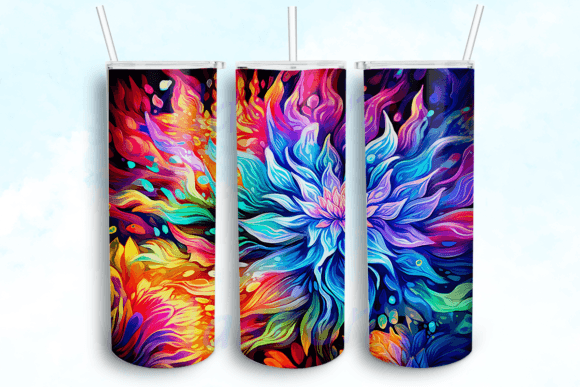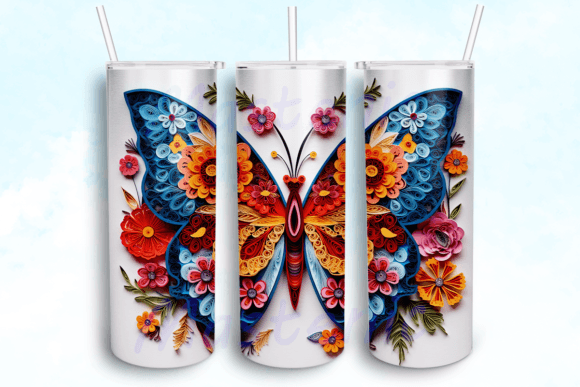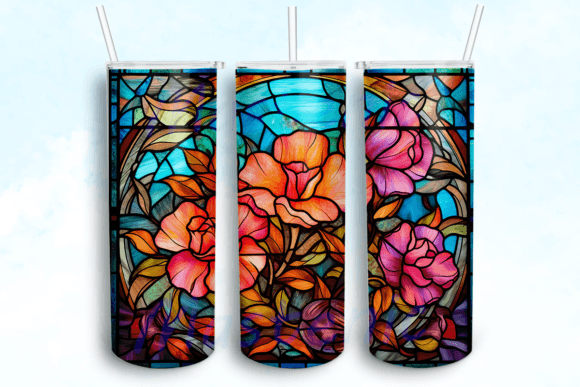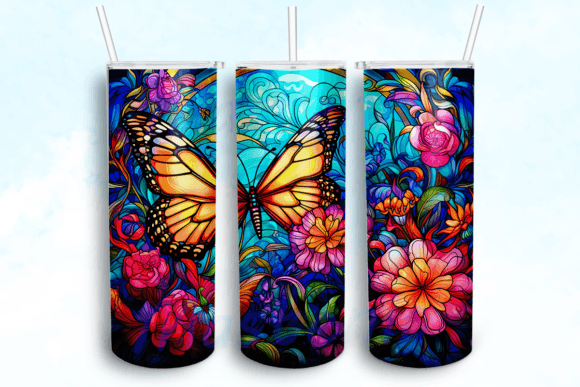
Colors Butterflies and Flowers Tumbler
A Designer’s First Look: Whimsy with Purpose
When I opened Colors Butterflies and Flowers Tumbler, I didn’t just see a PNG—I saw potential stitched in motion. The layout feels intentional: butterflies float gently around clustered florals, not crammed, not sparse—just enough breathing room for thread to breathe too. It’s soft but not saccharine, detailed but not fussy. This isn’t a design shouting for attention; it’s one that invites touch, pause, and personal connection. As someone who’s digitized hundreds of motifs for real-world embroidery projects, I immediately asked: *Where would this live best—not on screen, but on fabric?*
Real Project Test: From Mockup to Made-By-Hand
Last week, I used Colors Butterflies and Flowers Tumbler as the centerpiece for a custom embroidered linen tea towel—part of a small-batch holiday set for a local boutique. I resized the tapered PNG slightly (keeping proportions intact) and digitized it into a medium-density fill-and-satin stitch combo. The result? A finished product that felt cohesive, hand-finished, and quietly special. Customers commented on how “light” and “alive” the butterflies looked—not stiff or pixelated. That tells me the original vector-friendly layout translates well when stitched. It’s especially effective on natural fibers like linen, cotton, or medium-weight twill where texture enhances, rather than fights, the organic flow.
Where It Shines—and Where It Needs Care
Colors Butterflies and Flowers Tumbler works beautifully on stable, flat surfaces: tote bags, pillow covers, aprons, and baby onesies (when sized down thoughtfully). On sweatshirts? Yes—but choose midweight fleece over ultra-thin French terry. On caps? Proceed with caution: the width and taper suggest it’s optimized for vertical, smooth curves (like tumblers), not the tight dome of a baseball cap. You’d need to split or reposition elements unless you’re using a large-cap hoop and stabilizing aggressively.
It’s less ideal for stretchy knits without proper cutaway stabilizer—or for dark fabrics unless you test thread contrast first. Those delicate wing edges and thin floral stems rely on clean stitch definition. On textured or loosely woven fabric, they can blur. And while the 9.3″ x 8.2″ size gives generous room for detail, don’t force it into a 4″ hoop without simplifying or cropping—it’ll lose its rhythm.
Design Integrity Meets Customer Trust
In my craft business, every embroidered item carries my name—even when it starts as a digital file. So I judge Colors Butterflies and Flowers Tumbler not just by prettiness, but by how it holds up under scrutiny: Does it look handmade, not mass-printed? Yes—especially when stitched with tonal thread gradients (soft peach, sage, lavender). Does it feel cohesive across multiple products? Absolutely. I’ve paired it with simple monogrammed initials on matching baby blankets, and the visual language stays consistent: gentle, nature-rooted, unhurried.
For Etsy sellers or small shop owners, this matters deeply. A design like this elevates perceived value—not because it’s flashy, but because it feels considered. Buyers notice when petals have subtle dimension, when butterfly wings shift color softly, when spacing avoids visual clutter. That quiet polish builds trust. It says, *This wasn’t slapped on—it was chosen, tested, and stitched with care.*
Practical Notes Every Embroiderer Should Run Through
- Always test on scrap fabric first—especially if stitching on blends or textured weaves. Watch how fine lines hold up after washing.
- Check thread color contrast before finalizing. Light yellows or pale pinks may vanish on cream linen without a subtle underlay or shadow stitch.
- Review stitch density—this design leans decorative, not dense. That’s great for breathability on baby items, but means you’ll want tear-away or lightweight cutaway stabilizer to prevent puckering on thin cotton.
- Confirm hoop size compatibility. At nearly 10 inches tall, it needs at least a 6″ x 10″ hoop—or smart repositioning for smaller frames.
- Inspect small details in your embroidery software: those tiny flower centers and wing veins should digitize cleanly. If they feather or break apart, adjust pull compensation or reduce stitch length slightly.
- Test black-and-white mockups—not just for contrast, but to see if the composition still reads clearly without color cues.
- Compare light vs. dark backgrounds in your design preview. Some floral elements gain depth on navy; others recede. Know which version suits your product line.
- Verify licensing terms before selling finished items or bundling digitally. This listing states it's for use on 20oz skinny tumblers—but commercial embroidery rights aren’t specified. When in doubt, contact the creator.
Final Thought: A Design That Supports Your Craft, Not Just Fills Space
Colors Butterflies and Flowers Tumbler doesn’t try to be everything. It’s not a bold statement logo, nor a minimalist icon. It’s a quiet, confident motif—one that complements rather than competes. That makes it unusually versatile for makers who value cohesion across collections: think matching nursery sets, seasonal kitchen bundles, or personalized gift suites for baby showers and weddings. As a machine embroidery design, it respects the limits of thread and fabric. As a digital embroidery file, it gives you room to interpret—not just replicate. And as a piece of design assets for your craft business? It’s the kind of thoughtful detail that turns a good product into a memorable one.
If you’re selecting embroidery files for real projects—not just screen previews—this one earns its place in your working library. Just remember: even the loveliest design is only as strong as your testing, stabilizing, and intention behind it.