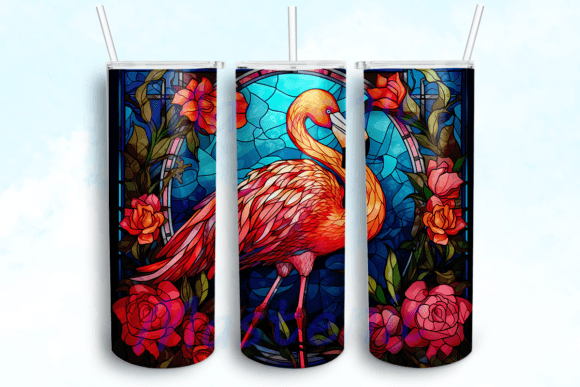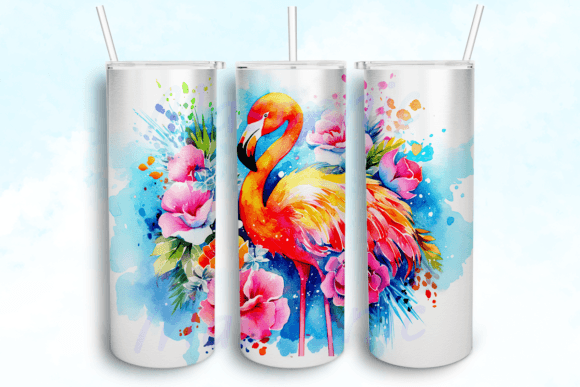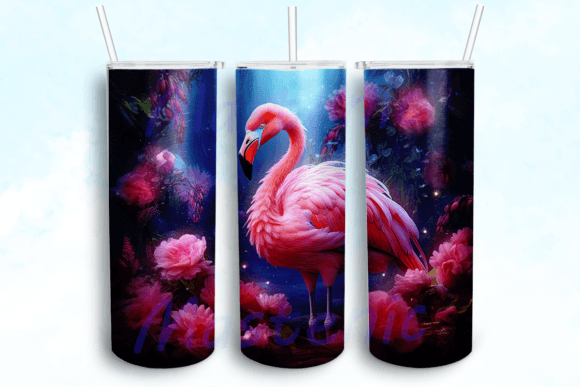
Flamingo with Pink Flowers Tumbler
A Designer’s First Look: Cheerful, Balanced, and Ready for Real Stitching
When I opened Flamingo with Pink Flowers Tumbler, my first thought wasn’t “cute”—it was “workable.” As someone who tests hundreds of embroidery files a year for client projects and small-batch production, I scan for balance before beauty. This design lands well: the flamingo’s pose is relaxed but distinct, the pink flowers bloom without crowding, and the overall composition breathes across its 9.3″ x 8.2″ footprint. It doesn’t scream for attention—it invites it. That makes it ideal for handmade products where charm meets wearability: think embroidered tote bags for boutique gift sets, linen tea towels for a spring kitchen line, or baby onesies where softness and clarity matter more than flash.
Where It Shines—and Where It Needs Thought
I tested Flamingo with Pink Flowers Tumbler as a machine embroidery design on midweight cotton twill (for a custom apron) and on French terry (for a relaxed-fit sweatshirt). On both, the shape held up beautifully—especially the tapered version, which wrapped cleanly around the curved edge of the sweatshirt’s chest pocket. The straight PNG worked just as well centered on a tote bag or pillow cover. Its strength lies in moderate detail: petals have gentle definition, the flamingo’s leg curves smoothly, and no element relies on micro-stitching that would vanish on textured fabric.
That said, I’d hesitate to use it full-size on thin jersey or highly stretchy knits without significant digitizing adjustments. The fill stitch areas—especially the flamingo’s body—are generous enough to stabilize but dense enough to stiffen lightweight fabrics if not paired with lightweight cutaway stabilizer. For baby embroidery or holiday embroidery on delicate muslin, I’d scale down to ~75% and simplify one or two flower layers manually. And while it reads clearly on light fabric, I’d avoid dark backgrounds unless stitching with high-contrast thread colors—no built-in underlay or shadow layer means it depends entirely on your thread choice for pop.
Real-World Fit: From Etsy Listings to Boutique Merchandise
Last week, I used Flamingo with Pink Flowers Tumbler to create a limited run of personalized gifts for a local florist’s Mother’s Day pop-up. We stitched it onto organic cotton tea towels and matching canvas totes. Customers responded instantly—not just to the motif, but to how *finished* it looked. No jagged edges, no lost details in corners, no awkward gaps between elements. That visual coherence builds customer trust fast, especially for Etsy sellers or craft fair vendors whose buyers equate clean stitching with professional craftsmanship.
It also translated well into digital product previews: I dropped the straight PNG into a printable mockup of a 20oz skinny tumbler (yes—the file’s intended use!) and layered it over lifestyle shots of coffee bars and garden brunches. The tapered version gave realistic wrap distortion, making the listing feel authentic, not generic. For creative entrepreneurs building cohesive branding, this design slots neatly into spring/summer collections alongside monogrammed napkins or embroidered nursery decor—no rebranding needed.
What to Check Before You Stitch
- Test on scrap fabric first—especially if using textured weaves like burlap or looped terry. What looks crisp on screen can blur when stitched.
- Confirm hoop size compatibility. At nearly 9.3″ wide, it won’t fit standard 4x4 or 5x7 hoops. You’ll need at least a 9x9 or larger, or plan for re-hooping on multi-position machines.
- Review stitch density in key zones: The flower centers and flamingo’s eye are small but defined—verify they don’t become too dense for fine fabrics or delicate threads.
- Check contrast in black-and-white mockups. Since it’s delivered as PNGs—not vector or native embroidery formats—you’ll need to digitize it yourself or work with a digitizer. Run grayscale previews to spot subtle tonal shifts that could disappear when stitched.
- Match stabilizer to end use. For commercial embroidery on apparel, medium-weight tear-away works for stable wovens; for baby embroidery or heirloom pieces, switch to soft cutaway + topping for smoothness.
Design Integrity Meets Commercial Sense
One thing stands out: Flamingo with Pink Flowers Tumbler feels intentional—not algorithmically generated or trend-chased. It avoids overused tropes (no glitter, no exaggerated gradients, no forced “vintage” filters) and leans instead into confident simplicity. That gives it longevity beyond seasonal demand. I’ve already added it to my go-to folder for custom apparel requests, embroidered patch samples, and small shop product development—not as filler, but as a reliable visual anchor.
For craft business owners, that reliability matters. When you’re balancing five Etsy listings, prepping for a holiday craft fair, or fulfilling a boutique wholesale order, you need design assets that behave predictably. This one does. It stitches cleanly, scales well (within reason), and maintains its personality across fabric types and product categories—from a linen pillow cover to a cotton-blend cap front. And because it’s delivered watermark-free and sized specifically for real-world use cases, it respects your time and your professionalism.
Final Thoughts for Makers Who Value Craft Over Clutter
If you’re evaluating Flamingo with Pink Flowers Tumbler for your next embroidery project, ask yourself: Does it support the story your product tells? For cheerful, approachable, nature-adjacent handmade goods—yes, emphatically. It’s not a statement piece meant to dominate a jacket back; it’s a quiet signature, a thoughtful accent, a detail that makes customers pause and smile. That kind of resonance is rare in mass-produced Graphics files—and invaluable for anyone building a Crafts-based brand rooted in authenticity.
Just remember: PNGs aren’t embroidery files out of the box. Before selling finished products or listing digital embroidery files derived from this asset, confirm licensing terms directly with the seller. And always, always stitch a test run—even on your favorite fabric. Because the best design judgment isn’t made on screen. It’s made with needle, thread, and intention.