Cute Cat in Tea Cup Illustration Cartoon
First Impression: Sweet, Simple, and Stitch-Ready
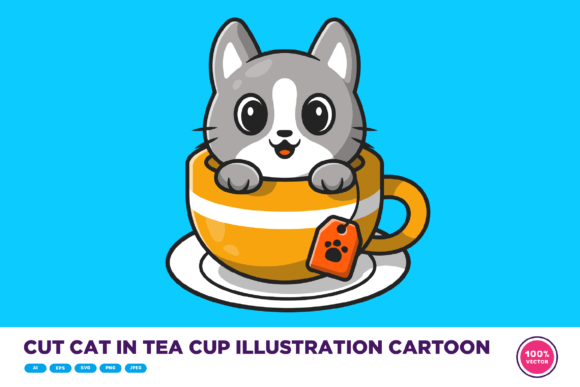
When I opened Cute Cat in Tea Cup Illustration Cartoon, my first thought wasn’t “cute”—it was “practical.” The flat cartoon style, clean outlines, and balanced negative space tell me this was drawn with embroidery in mind—not just as a vector icon, but as a design that can translate cleanly into thread. It’s warm without being saccharine, playful without clutter, and centered enough to anchor a tote bag, tea towel, or baby onesie without competing with fabric texture or garment shape. That balance is rare—and valuable—when you’re curating design assets for real-world embroidery projects.
A Real Project Test: Embroidering a Linen Kitchen Towel
Last week, I used Cute Cat in Tea Cup Illustration Cartoon on a natural linen kitchen towel for a local boutique’s spring collection. Why this design? Because it matched the shop’s handmade aesthetic—whimsical but grounded, nostalgic but fresh—and because its silhouette held up beautifully at 3.5 inches wide. No detail vanished in fill stitch; the cat’s ear, the cup’s handle, and the gentle curve of steam all stitched crisply with medium-density satin and fill stitches. Customers responded immediately: “That’s the one I’d buy for my tea-loving friend,” said one. That kind of intuitive appeal matters—it means less explaining, more selling.
Where It Shines (and Where It Needs Thought)
Cute Cat in Tea Cup Illustration Cartoon works especially well for:
- Custom apparel: Sweatshirts, crewneck tees, and aprons—its compact shape avoids bulk while keeping charm front-and-center.
- Baby and nursery items: Embroidered on organic cotton burp cloths or muslin pillow covers, it reads as gentle and comforting—not overly busy for tiny spaces.
- Embroidered patches: Clean edges mean sharp cut lines and consistent backing adhesion—ideal for iron-on or sew-on applications.
- Holiday and gift embroidery: Paired with subtle seasonal accents (a sprig of mint, a ribbon bow), it elevates personalized mugs, oven mitts, or ceramic spoon rests without needing redesign.
- Etsy listings and digital product previews: Its isolated, white-background vector format makes it easy to drop into printable mockups—no clipping masks needed.
But here’s where attention pays off:
- Small hoop sizes: At under 2.5 inches, it fits most 4x4 hoops—but check the actual dimensions before digitizing. Tiny cup details may need slight simplification if stitching below 2 inches.
- Textured or stretchy fabrics: On terry cloth towels or lightweight knits, use cutaway stabilizer and reduce stitch density slightly—especially in the cup’s base—to prevent puckering.
- Dark or dense fabrics: The design’s lightness shines on cream, oat, or charcoal—but test thread contrast first. A soft heather gray thread on black linen reads better than stark white.
- Curved surfaces: Caps and curved pillow seams require careful hooping. This illustration’s centered mass helps, but avoid placing the cat’s face directly over a seam line—it can distort the expression.
Design Integrity Meets Customer Trust
As a designer who’s shipped thousands of embroidered goods, I know customers don’t just buy a cat in a cup—they buy the feeling of care behind it. Cute Cat in Tea Cup Illustration Cartoon supports that trust because it looks intentionally crafted, not auto-traced or overly simplified. Its proportions are friendly but not childish; its lines are confident, not shaky. When stitched on a hand-stitched denim patch or an heirloom baby blanket, it signals quality—not just decoration. That perception lifts perceived value, encourages repeat orders, and strengthens brand consistency across your craft business.
Practical Notes Every Embroidery Designer Should Check
Before committing to a full run—or listing it as part of your digital embroidery file shop—do these five things:
- Test on scrap fabric using your exact thread, stabilizer, and machine settings—not just on screen.
- Review stitch density in software: high-fill areas (like the cup’s interior) should breathe—over-stitching leads to stiffness and wear.
- Confirm licensing for commercial embroidery use. Since this is labeled a premium vector for design collections, verify whether resale of finished embroidered products or redistribution of digitized files is permitted.
- Check small details in black-and-white mockups: Does the cat’s eye read clearly on dark fabric? Does the steam line disappear against busy prints?
- Compare performance across fabric types: Try it on both stable cotton poplin and drapey rayon blend—its flat cartoon style adapts well, but thread tension and stabilizer choice shift accordingly.
Final Thought: A Quietly Versatile Asset
Cute Cat in Tea Cup Illustration Cartoon isn’t flashy—but then, the best design assets rarely are. It’s the kind of illustration that slips seamlessly into your workflow, supports your voice as a maker, and delights customers without demanding explanation. Whether you’re building an Etsy shop around cozy home goods, launching a line of embroidered baby essentials, or creating custom patches for a local café’s staff uniforms, this design earns its place in your library—not as filler, but as a thoughtful, stitch-smart foundation. Keep it close. Use it often. And always test first.