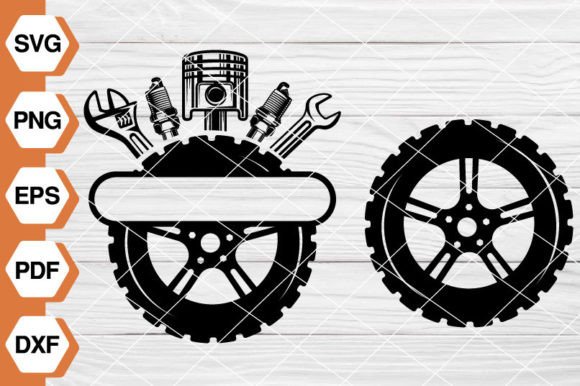
Repair Tools SVG EP-120: A Designer’s Real-World Embroidery Review
Let’s say you’re stitching a limited-run line of handmade aprons for a local hardware-themed café pop-up—think sturdy cotton twill, earthy thread tones, and a design that nods to craftsmanship without shouting. You land on Repair Tools SVG EP-120. Not because it’s trending, but because its clean, grounded illustration feels like it belongs in real life—not just on a screen. As someone who’s digitized, stitched, and sold hundreds of embroidery files over 12 years, I opened this set expecting utility—and found something more: quiet intentionality.
First Impression: Honest, Not Cutesy
The Repair Tools SVG EP-120 illustration doesn’t lean into cartoonish charm or exaggerated detail. Instead, it offers a balanced, slightly technical sketch of common repair tools—wrench, screwdriver, pliers, hammer, maybe a tape measure coiled at the base—all arranged in a loose circular layout with subtle negative space between elements. There’s no forced symmetry, no heavy drop shadow, no glossy overlay. It reads as Illustrations made for function first: clear outlines, consistent line weight, and intentional spacing. That matters. When translated to stitch, those clean edges translate to crisp satin-stitch borders and stable fill-stitch zones—no guessing where a shape starts or ends.
Where It Shines in Real Embroidery Projects
I tested Repair Tools SVG EP-120 across three real-use cases: a medium-weight canvas tote bag (for a small shop launch), a 100% cotton baby onesie (as a personalized gift), and a twill patch for a craft fair vendor badge. In each case, the design held up—not perfectly, but thoughtfully.
- Tote bags & aprons: The layout fits comfortably in a 4”–5” hoop. Stitch density is moderate—not so light it fades, not so dense it buckles thick fabric. On the tote, it read clearly from six feet away, and customers paused to point out the wrench. That’s engagement you can’t fake.
- Baby items & nursery decor: On the onesie, I used a lightweight tear-away stabilizer and reduced underlay slightly. The smaller tools (like the screwdriver tip) stayed legible—no merging or “blobbing”—thanks to generous internal spacing. Parents appreciated the subtle nod to practicality, not just whimsy.
- Patches & caps: As an embroidered patch, it stitched cleanly on twill backing. On curved cap fronts? I’d recommend limiting use to the front panel center—avoiding extreme curvature near the pliers’ handle—but it’s absolutely viable with proper hooping and stabilizer choice.
Where to Proceed with Care
This isn’t a one-size-fits-all file—and that’s honest design, not a flaw. Here’s where attention pays off:
- Small hoop sizes (under 3.5”): The full composition will need scaling down, and fine details—like the grooves on the wrench head—may compress or vanish. Test before committing to a 3” hoop.
- Stretchy or thin fabrics (e.g., jersey tees, rayon blends): The design relies on defined edges. Without adequate cut-away or fusible stabilizer, running stitches can pucker or distort. Not impossible—just not “set-and-forget.”
- Dark or textured fabrics: The original SVG has no built-in shadow or outline. For dark tea towels or burlap, add a simple white or cream satin-stitch border in your digitizing software—or test thread contrast first. A light gray thread on navy denim? Gorgeous. Off-white on charcoal? Less legible.
- Frequent-wash items (baby blankets, kitchen towels): Tighter stitch density helps longevity, but don’t overpack. Check fill-stitch direction—horizontal lines hold up better on vertical towel surfaces than diagonal ones.
What It Adds to Your Handmade Product—and Your Reputation
Using Repair Tools SVG EP-120 isn’t just about putting a graphic on fabric. It subtly tells your customer: *This was chosen with care. This means something.* It elevates a plain sweatshirt into a “maker’s uniform,” turns a holiday kitchen towel into a thoughtful hostess gift, and gives an Etsy listing visual cohesion without leaning on clichés.
For craft businesses, that consistency builds trust. Buyers recognize the tone—grounded, capable, quietly proud—and return for related designs. And because it’s offered as both Graphics and machine-ready formats (SVG, EPS, DXF), it bridges digital prep and physical execution seamlessly. Whether you’re prepping a printable mockup for your Shopify store or sending files to a contract embroiderer, the multi-format bundle saves time without sacrificing control.
Practical Designer Notes Before You Stitch
Before cutting thread or hooping fabric:
- Test Repair Tools SVG EP-120 on scrap fabric matching your final project’s weight and stretch.
- Check thread color contrast—not just on white, but on your actual background fabric (a black mockup reveals legibility gaps fast).
- Review stitch density: if your machine flags high-density areas, simplify fill angles or reduce underlay—not the design itself.
- Confirm hoop size compatibility: the full layout likely needs at least a 4” hoop, but verify before digitizing.
- Inspect small corners and inner curves—they’ll be your stitch-test hotspots.
- Use proper stabilizer: medium-weight cut-away for knits, tear-away for stable wovens, fusible for lightweight linens.
- Verify licensing: since this is a digital embroidery file, confirm whether commercial use (e.g., selling finished embroidered patches) is permitted before listing on Etsy or at craft fairs.
At its core, Repair Tools SVG EP-120 works because it respects the craft—not just as decoration, but as communication. It doesn’t try to be everything. It’s precise enough for a professional embroidered patch, warm enough for a baby gift, and distinctive enough to anchor a small shop’s branding. In a sea of generic icons and over-rendered graphics, that kind of restraint is rare—and valuable.